
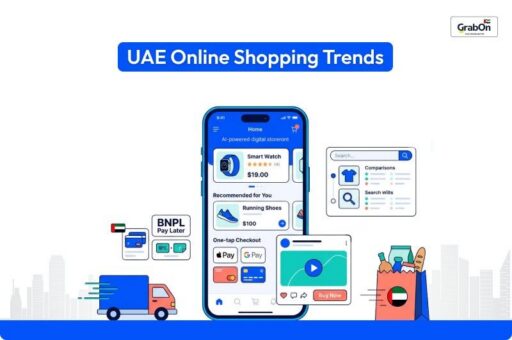
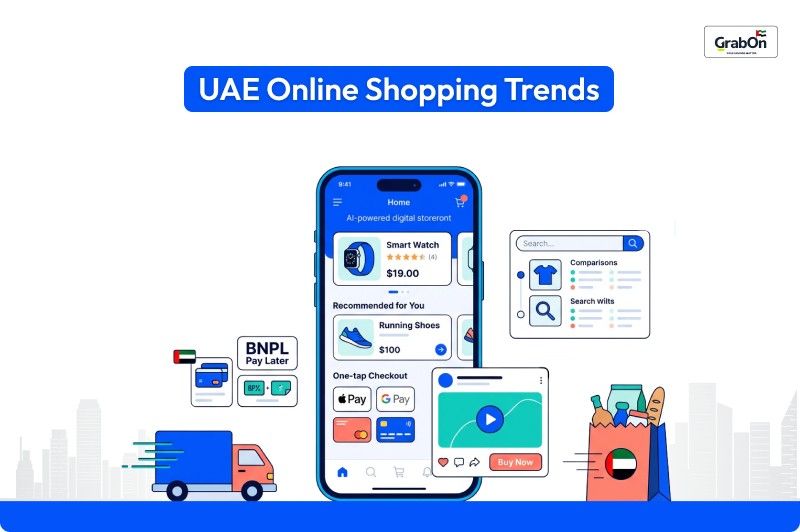
UAE online shopping in 2026 is defined by 5 major shifts: mobile now drives 78.67% of all orders, BNPL (Tabby, Tamara) is used by 40%+ of consumers, cash-on-delivery volumes have fallen 37%, quick commerce delivers in 12-15 minutes across Dubai and Abu Dhabi, and the market has crossed $12.3 billion – heading to $21 billion by 2031.
Online shopping in the UAE is no longer an occasional desktop activity. It has become a daily, mobile-first habit, driven by fast delivery infrastructure and an expanding set of payment options. This report breaks down the key data points shaping the market in 2026.
Key Market Data Points
- UAE e-commerce market: $12.3 billion in 2026, projected to be $21 billion by 2031
- Mobile orders: 78.67% of all UAE e-commerce transactions
- Fastest-growing payment method: BNPL, at a 13.27% CAGR through 2031
- Fastest delivery benchmarks: Noon Minutes (12 min), Amazon Now (15 min) in Dubai and Abu Dhabi
- Peak sales event: White Friday spending runs 31% above the monthly average
- Cross-border threshold: Orders under AED 1,000 are now tax-exempt
How Big Is the UAE E-Commerce Market in 2026?
The UAE e-commerce market reached $12.3 billion in 2026 and is forecast to hit $21 billion by 2031, growing at roughly an 11.29% CAGR. For context, the market stood at just $2.6 billion in 2019. According to Dubai Chamber of Commerce analysis, the sector had already grown to $4.8 billion by 2021, nearly doubling from its 2019 base; and growth has continued to compound well beyond initial projections since then.
The UAE ranks as the 45th-largest e-commerce market globally by absolute size, but outperforms that ranking significantly on mobile penetration, delivery infrastructure, and per-capita digital spend. Online sales currently represent around 14.4% of total UAE retail, a figure expected to climb to 16.5% by 2028.
| Year | Market Size (USD) | Key Driver |
| 2019 | $2.6 billion | Baseline growth |
| 2020 | $3.9 billion | COVID-19 acceleration (+53%) |
| 2021 | $4.8 billion | Digital habits solidified |
| 2024 | $9 billion | Mobile commerce & logistics boom |
| 2026 | $12.3 billion | Q-commerce, BNPL & AI personalisation |
| 2031 (proj.) | $21 billion | Regional expansion & B2B growth |
The Shift Toward Mobile Commerce
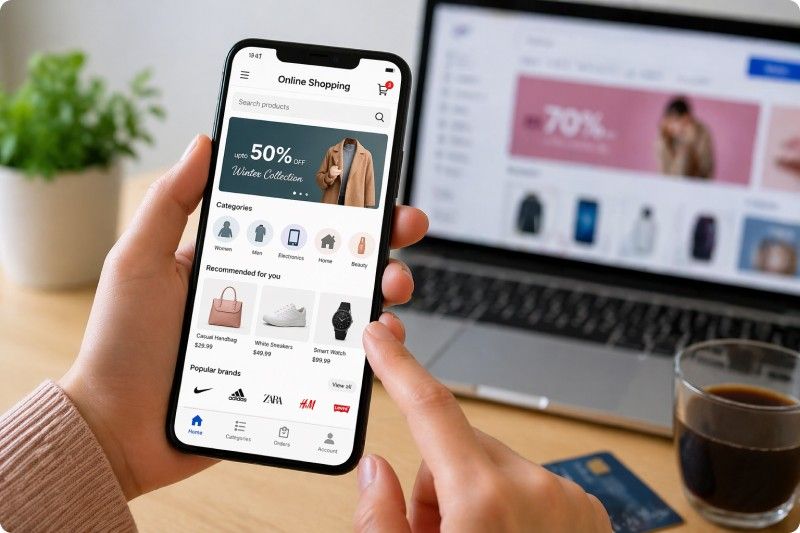
Smartphones now process 78.67% of all e-commerce orders in the UAE and are growing at a 16.24% CAGR, the fastest of any device category. The UAE’s 95% 5G coverage makes browsing product videos and using AR try-ons easy.
- Biometric checkout is now standard. The UAE Central Bank’s March 2026 directive to phase out SMS-based OTPs has pushed platforms toward fingerprint and facial recognition, cutting mobile checkout time by an estimated 30-40% compared to older OTP flows.
- Zero-rated data for shopping apps. UAE carriers Etisalat and du, with a combined 22 million subscribers, offer zero-rated data for select partner shopping apps, making browsing and ordering essentially free on data plans.
- Shoppable video is driving impulse buys. Noon and Namshi have integrated shoppable video directly inside their apps, keeping users on the platform and capturing purchases before they migrate to social feeds.
- More than one-third of UAE consumers shop via smartphone at least once a week, which is above the global average for weekly mobile purchase frequency.
- Repeat purchase frequency is climbing. Mobile order repetition is growing 20-25% year-on-year, driven by faster checkout flows and loyalty programme integration.
The Rise of BNPL and Digital Wallets
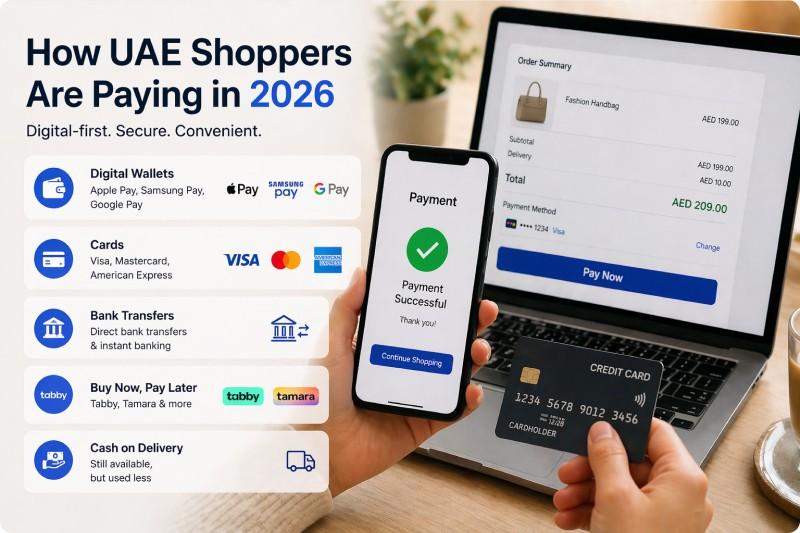
Payment behaviour has moved sharply away from cash-on-delivery. COD volumes have fallen 37% over the past four years, and 74% of users say they would default to card or wallet payments if COD were removed entirely. Dubai’s Cashless 2026 initiative targets 90% digital transactions citywide.
| Payment Method | Current Share/Status | Trend |
| Digital Wallets (e& money, PayIt, Apple Pay) | 43.92% of transactions (2025) | Rising fast |
| Credit/Debit Cards | 67% of consumers prefer cards | Stable |
| Buy Now Pay Later (Tabby, Tamara) | Used by 40%+ of UAE consumers; 13.27% CAGR to 2031 | Fastest growth |
| Cash on Delivery | Volumes down 37% over 4 years | Declining |
| PayPal | Offered by 36.5% of stores | Niche/cross-border |
BNPL’s expansion has been driven partly by merchant integrations. Tabby’s 2025 integration with Checkout.com added roughly 15,000 additional UAE merchants offering installment payment at checkout. Micro-instalments under AED 500 have become particularly common for impulse fashion and electronics purchases, correlating with higher order frequency on participating platforms.
Logistics: The Race to Sub-15-Minute Delivery
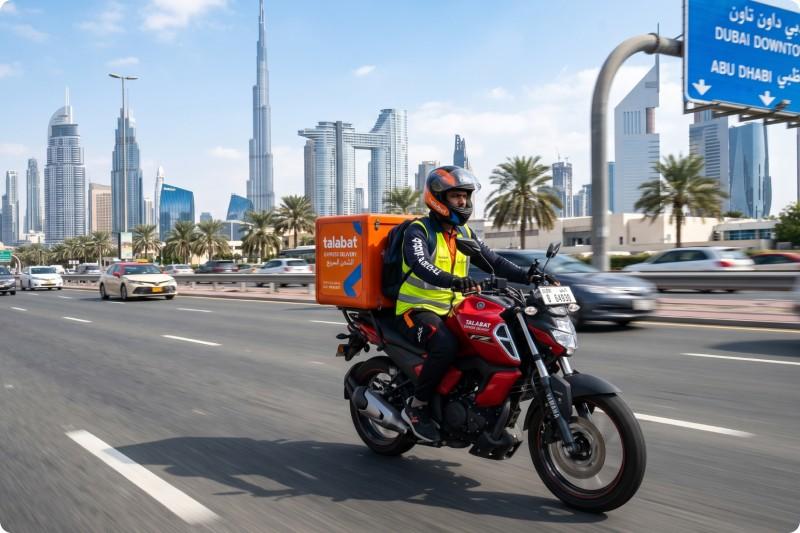
Half of UAE online shoppers now expect delivery in under two hours, a threshold that has reshaped logistics investment across the country. Dark stores, fuel-station micro-hubs, and predictive inventory positioning are the primary mechanisms platforms are using to compress delivery windows further.
In January 2026, Noon activated 20 additional dark stores across Dubai and Abu Dhabi, raising real-time inventory coverage to 85% of urban households and cutting average delivery windows to 12 minutes. Noon’s fast local fulfilment is also why it remains one of the more heavily discounted platforms during flash sales. Noon discount codes tend to see the highest redemption volume during these delivery-driven promotional windows.
Amazon’s 2025 UAE launch of its Now service brought roughly 15-minute delivery to Dubai and Abu Dhabi via neighbourhood micro-fulfilment centres.
Talabat’s acquisition of Instashop (reported at $32 million) consolidated quick-commerce delivery under a single platform. Carrefour UAE’s automated micro-fulfilment has cut pick times by 60%, enabling same-day grocery delivery at scale.
| Platform | Delivery Offer | Coverage |
| Noon Minutes | 12-15 min via dark stores | 85% of Dubai & Abu Dhabi households |
| Amazon Now | 15 min essentials | Dubai, Abu Dhabi urban centres |
| Talabat Mart | 15-30 min groceries | Major UAE cities |
| Careem Now | 15-30 min | Dubai, Abu Dhabi, Sharjah |
| Carrefour (MAF) | Same-day; 60% faster pick time | UAE-wide |
| Standard Amazon.ae | Same-day to next-day | UAE-wide + GCC export |
Orders fulfilled in under 10 minutes are forecast to grow at a 6.02% CAGR, led by Amazon Now, Deliveroo, and Talabat. The ADNOC-Noon partnership has also turned ADNOC fuel stations into micro-fulfilment nodes, extending 15-minute coverage into areas dark stores don’t reach.
Delivery infrastructure remains uneven outside Tier 1 cities: windows in the northern emirates (Sharjah, Ajman, Ras Al Khaimah) run longer, with per-parcel logistics costs of AED 35–50, a gap that continues to shape which platforms operate competitively in those markets.
Online Shopping Category Growth
| Category | Market Share/Size | Growth |
| Consumer Electronics | 19.9% of e-commerce revenue | Mature |
| Fashion & Apparel | 21.59% share (2025) | Stable growth |
| Food & Beverages | Fastest-growing category | 13.16% CAGR to 2031 |
| Beauty & Personal Care | Reached almost $1B online in 2025 | Strong |
| Home & Furniture | Boosted by the property boom | Emerging |
| Snack Foods (Q-commerce) | Fastest-growing sub-category | High |
Quick commerce is also expanding well beyond food delivery. Platforms that started as restaurant-delivery aggregators now process meaningful order volume in pharmacy, pet supplies, baby care, personal care, and household essentials — Instashop’s absorption into Talabat is a clear example of this full-basket strategy.
Is Social Commerce Growing in the UAE?

The UAE has 115% social media penetration, meaning more accounts exist than people. Social platforms are no longer just places to discover brands; they are increasingly where purchases are completed. Around 96% of consumers expect in-app checkout from brands they follow, and 50.5% use social platforms specifically to research brands before buying.
- 75% of UAE consumers trust influencer recommendations, meaning product discovery for most buyers happens through people rather than search results.
- TikTok Shop and Instagram Checkout are the main battlegrounds. Local platforms are embedding shoppable video to stop users from migrating to these external feeds.
- Google Lens visual search has grown 65% year-on-year, processing over 100 billion visual searches, with one in five carrying commercial intent.
Cross-Border Trade Patterns
Around 58% of online purchases in the UAE come from overseas vendors, and shopper confidence in international platforms is high, driven by secure payment gateways and reliable international logistics.
- Domestic platforms still lead by value. Local and regional sites account for 73% of total online sales, but foreign platforms are growing faster and are expected to gain 34% in market share by 2026.
- Counterfeit concerns are shifting behaviour. AED 1.2 billion worth of counterfeit goods were seized in 2024, which has made 65% of shoppers prefer local platforms for authenticity assurance when buying branded goods.
- Duty threshold relief helps shoppers. Imports valued at under AED 1,000 are exempt from tax fees following a recent Dubai Customs announcement, which directly reduces the cost of cross-border purchases for most everyday orders.
- Amazon.ae expanded cross-border in December 2025, launching same-day export shipping to Riyadh and Manama from its Dubai South hub, cutting GCC-wide cross-border lead times by 60%. Shoppers comparing cross-border pricing often check Amazon coupons against the AED 1,000 duty-exempt threshold to work out whether a local or cross-border order comes out cheaper.
- 65% of shoppers now prefer local sites for branded goods, citing authenticity concerns as the primary reason, a reversal from earlier years when international platforms were seen as safer for brand-name items.
| Platform Type | Share of Sales | Growth Trajectory |
| Local / Regional (Noon, Namshi, Ounass) | 73% | Steady |
| Global Platforms (Amazon.ae) | Significant & growing | 34% market share gain projected |
| Direct cross-border (Shein, AliExpress) | Declining trust | Under pressure |
| Desertcart & cross-border specialists | Niche | Stable |
For shoppers relying on niche cross-border platforms, Desertcart coupon codes are worth checking alongside offers from Amazon.ae and Noon, especially for international products that are not available on local platforms.
Seasonal Demand Patterns in the UAE

| Period | Shopper Behaviour | Market Impact |
| Ramadan | Heavy grocery and food ordering; many consumers shift fully to online grocery during fasting hours | Deep discounts across food, fashion, electronics |
| Eid Al Fitr/Eid Al Adha | Surge in fashion, gifting, and luxury purchases | Flash sales, gift sets, premium packaging |
| Back to School (Aug-Sep) | Family spending surge; overseas summer spending dips in the week before school starts as families return | Electronics, stationery, clothing bundles |
| White Friday (Nov) | Spending surges 31% above the monthly average; deal-related search interest spikes | Largest deal volume of the year |
| Year-End (Dec-Jan) | Fast-growing period; restaurant search interest climbs 10% in the final two weeks of the year | Clearance sales, gift buying, New Year promotions |
Top UAE Online Shopping Platforms at a Glance (2026)
| Platform | Best For | Delivery Speed | BNPL Available | Key Strength |
| Noon | Fashion, electronics, groceries | 12 – 15 min (Noon Minutes) | Yes (Tabby, Tamara) | Local deals, Arabic support |
| Amazon.ae | Widest selection, cross-border | Same-day to next-day | Yes | Prime benefits, GCC shipping |
| Namshi | Fashion and beauty | 1 – 3 days | Yes | Curated fashion brands |
| Carrefour / Careem | Groceries, daily essentials | Same-day | No | MAF network, UAE-wide coverage |
| Talabat Mart | Groceries, pharmacy, essentials | 15 – 30 min | No | Quick commerce breadth |
| Shein | Budget fashion | 7 – 15 days | Limited | Price, trend speed |
| Ounass | Luxury fashion | 2 hours in Dubai | No | Authenticity, premium brands |
To Conclude
The UAE e-commerce market in 2026 is defined by three factors: the near-total shift to mobile transactions, the rapid displacement of cash-on-delivery by digital wallets and BNPL, and a logistics race that has pushed standard delivery windows down to 12-15 minutes in major urban centres.
Growth is no longer coming primarily from new user acquisition; the market matured past that stage years ago, but from deepening transaction frequency, category expansion into essentials and pharmacy, and infrastructure investment extending fast delivery beyond Tier 1 cities.
FAQs
How big is the BNPL market in the UAE?
Buy Now Pay Later is used by over 40% of UAE consumers and is growing at a 13.27% CAGR through 2031, making it the fastest-growing payment category in the market, ahead of digital wallets and card payments.
Why is mobile commerce growing faster than desktop in the UAE?
Mobile orders are growing at a 16.24% CAGR, driven by near-universal 5G coverage, biometric checkout replacing SMS OTPs, and zero-rated data partnerships between telecoms and shopping apps that make browsing effectively free.
What share of UAE e-commerce comes from cross-border sales?
Around 58% of online purchases originate from overseas vendors, though domestic platforms still account for 73% of total sales by value. Foreign platforms are projected to gain 34% in market share by 2026.
What is driving UAE e-commerce growth in 2026?
Mobile penetration, BNPL adoption, and quick-commerce infrastructure are the three biggest growth drivers. Digital wallets and installment payments have displaced cash-on-delivery, while dark-store networks have cut delivery times to under 15 minutes in major cities.

Shaoni is a whimsical wordsmith, who writes with her imagination and creativity. She enjoys exploring and learning new things and cuddling with her cats.